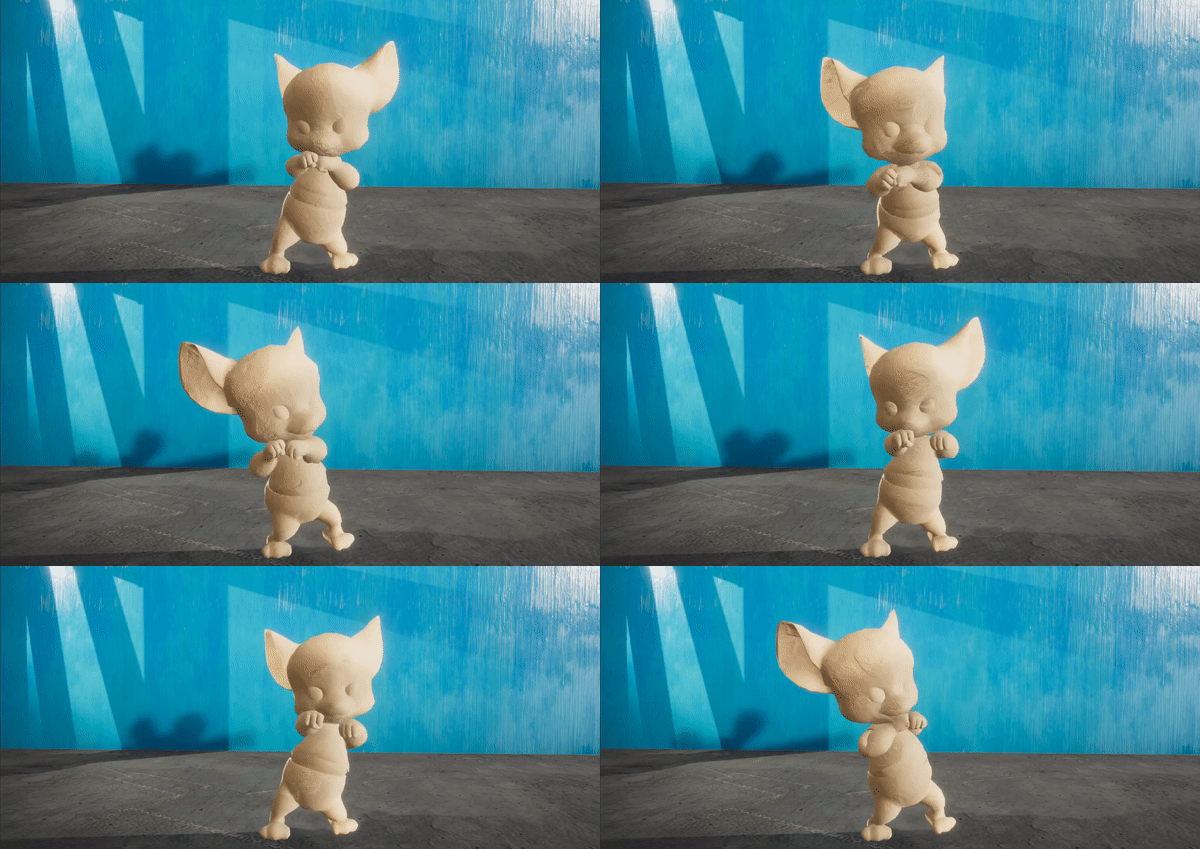
Description
The project focuses on the implementation and study of real-time Claymation, a novel animation technique that combines traditional stop-motion methods with real-time rendering using computer graphics. The aim of the project is to replicate the visual aesthetic of Aardman Animations, a well-known animation studio renowned for its Claymation films.
The project utilizes Unity Engine 2022.1.16.f1.
To achieve the desired visual style, the project explores the properties of Plasticine modelling clay used by Aardman Animations. The clay’s matte finish with a slight glossy shine and the way light interacts with its material properties are analysed. Additionally, the project takes into account the unique characteristics of Aardman models, which often exhibit dents and fingerprints left by sculptors, as well as the slightly choppy animation effect produced by the stop-motion technique.
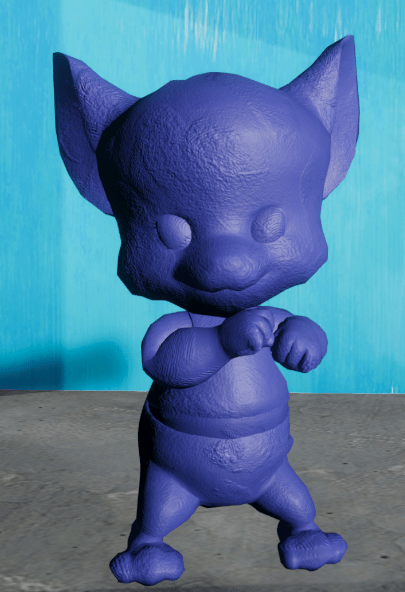
In terms of rendering techniques, the project focuses on PBR rather than Non-photorealistic rendering (NPR) to match the realistic look of clay in Aardman’s films. PBR considers various factors such as light intensity, colour, reflection, and refraction to create accurate and physically plausible images. The project incorporates the microfacet model in PBR, which describes surfaces at a microscopic level as tiny reflective mirrors. The roughness parameter is used to approximate the surface’s microfacet roughness, affecting the size and sharpness of specular reflection shapes.
The project utilizes Shader Graph, to visually author shaders as a baseline preview and then HLSL to achieve real-time rendering results. C# was used to alter the animation curves in Unity.
The Bidirectional Reflectance Distribution Function (BRDF) is implemented to approximate the reflective and refractive properties of clay-like materials. The Cook-Torrance BRDF, which adheres to the law of energy conservation, is chosen for this implementation. It combines the diffuse and specular components to determine the overall appearance of the material.
Throughout the project, related works in the field of Claymation are referenced, such as Clay Jam, Clay Doh, and Claybook. These examples provide insights into the use of Claymation in mobile games, procedural shaders, and physics-based puzzle games, respectively.
To view the full report, please click on the following link:
 Wei Yong's Tech Art Blog